Elevating Greeting and Wedding Stationery with Hand Drawn Floral Vector Assets
In the world of digital design and print stationery, there is a perpetual tension between efficiency and authenticity. While modern software allows for rapid production, clients and recipients often crave the organic, imperfect beauty of traditional artistry. This is where hand drawn floral cards and vector-based botanical assets bridge the gap. Specifically designed for greeting cards and wedding invitations, these resources offer the soulful aesthetic of watercolor or ink illustration combined with the technical precision of scalable vector graphics. Understanding how to utilize these assets—particularly ungrouped floral ornaments within a 5 x 7 inch format—is essential for designers, DIY brides, and small business owners looking to create bespoke stationery without starting from scratch.
The Intersection of Traditional Art and Vector Technology
To fully appreciate the value of hand drawn floral frames and backgrounds, one must first understand what distinguishes them from standard digital clip art. True hand drawn vectors are typically created using a stylus on a tablet or digitized from physical ink drawings. Unlike raster images (pixels), vectors are defined by mathematical paths. This means that a delicate peony or an intricate vine can be scaled from a postage stamp size to a billboard without losing a single crisp edge.
However, the true power lies in the file structure. High-quality floral assets are provided as ungrouped vectors. For beginners, "grouping" is a function in design software that locks multiple shapes together. When you purchase or download premium hand drawn floral packs, the elements should be separated. This allows you to select a single leaf, a specific bud, or an entire corner arrangement independently. You are not stuck with a static image; you are given a digital garden from which you can harvest individual components to build something entirely new.
Why Ungrouped Elements Matter for Customization
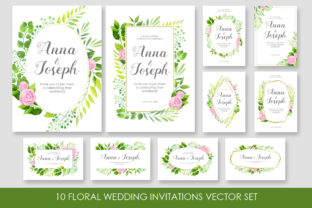
The ability to ungroup and manipulate separate ornaments is the defining feature of professional-grade stationery design. Consider a scenario where you are designing a wedding invitation suite. The main invitation might require a lush, full-color floral frame. However, the RSVP card may need only a subtle sprig of eucalyptus in the corner, and the thank-you note might call for a monochromatic outline version of the same flowers.
With ungrouped vector files, you can:
- Recompose Frames: Take corner pieces and mirror them to create a center-top arch, or arrange scattered buds to form a completely different border style.
- Alter Color Palettes: Because vectors use fill and stroke attributes rather than baked-in pixels, you can change a blush pink rose to a deep burgundy in seconds to match a specific wedding theme or brand identity.
- Create Depth: Layer individual leaves behind text boxes while keeping blooms in the foreground, creating a sense of dimension that flat PNG backgrounds cannot achieve.
- Mix and Match: Combine elements from different sets seamlessly, as long as they share a similar artistic style, to create unique designs that do not look like generic templates.
Technical Specifications: Ensuring Print Quality
A common misunderstanding among novice designers is assuming that any digital file will work for professional printing. When dealing with greeting cards and wedding stationery, technical specifications are non-negotiable. The industry standard size for many formal invitations and greeting cards is 5 x 7 inches. Assets designed specifically for this dimension ensure that proportions remain correct and that no critical details are lost during cropping.
Furthermore, resolution is paramount. For raster exports like PNG and JPG, the file must be at least 300 DPI (dots per inch) at actual print size. Mathematically, this translates to 1500 x 2100 pixels for a 5 x 7 inch canvas. Anything less than this density will result in pixelation or blurriness when printed on high-quality cardstock. While the source AI, EPS, or PDF files are infinitely scalable, having pre-sized 300 DPI raster versions included in the asset pack saves significant time for users who prefer working in photo editing software like Photoshop or Canva rather than vector programs like Illustrator.
Understanding File Formats for Different Workflows
Versatility in file delivery ensures that these floral assets are accessible to a wide range of users, from professional graphic designers to hobbyists.
- AI (Adobe Illustrator): The native source file. Best for deep editing, recoloring, and restructuring the ungrouped elements. Requires Adobe Illustrator.
- EPS (Encapsulated PostScript): A universal vector format compatible with almost all vector software, including CorelDRAW, Inkscape, and Affinity Designer. Ideal for those who do not use Adobe products but still need vector editability.
- PDF (Portable Document Format): Often overlooked as a design file, vector PDFs retain editable paths and can be opened in many free viewers and editors. They serve as an excellent middle ground for sharing proofs or simple edits.
- PNG/JPG: Rasterized versions at 1500 x 2100 pixels. These are "ready-to-use" files perfect for drag-and-drop platforms, digital invitations, or web previews where vector editing is unnecessary.
Practical Applications in Modern Stationery Design
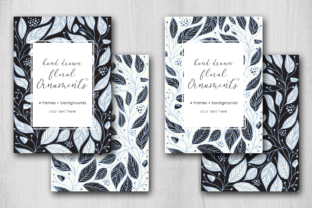
The relevance of hand drawn floral vectors extends far beyond simple decoration. In the current market, personalization is the primary driver of value in the stationery industry. Mass-produced cards are losing ground to designs that feel curated and intentional. By utilizing a set of four distinct frames and backgrounds, a designer can create a cohesive collection rather than disjointed singles.
For example, a wedding stationer might use Frame A (a dense, romantic border) for the formal invitation, Background B (a light, airy wash with sparse line art) for the reception details, Frame C (a geometric-floral hybrid) for place cards, and Background D (a textured paper effect with floral accents) for the menu. Because all assets originate from the same hand drawn collection, the visual language remains consistent across the entire event, reinforcing the couple's brand identity.
In the realm of greeting cards, these assets solve the "blank page syndrome." A well-designed floral background provides immediate context and mood. A dark, moody botanical frame suggests sympathy or elegance, while bright, scattered wildflowers imply celebration or gratitude. The designer’s role shifts from drawing every petal to curating and arranging existing art to convey the right message, significantly reducing turnaround time while maintaining high artistic standards.
Common Misconceptions About Digital Florals
Despite their utility, some purists argue that digital florals lack the warmth of traditional media. This assumption usually stems from experience with low-quality, auto-traced vectors that look plastic and sterile. However, premium hand drawn vectors preserve the pressure sensitivity, texture, and natural flow of the original artist's hand. When printed on textured linen or cotton paper, the distinction between digital and analog becomes nearly invisible to the untrained eye.
Another misconception is that using pre-made assets is "cheating." On the contrary, professional design has always relied on modular elements. Just as a carpenter uses pre-milled molding to frame a custom cabinet, a stationery designer uses floral vectors to frame custom typography. The creativity lies in the composition, color grading, and typographic pairing, not solely in the rendering of botanical anatomy. Understanding this distinction empowers creators to use these tools confidently and ethically.
Building a Broader Understanding of Asset Usage
Ultimately, mastering the use of hand drawn floral cards and frames is about understanding the balance between constraint and freedom. The 5 x 7 inch boundary provides a necessary container for creativity, while the ungrouped vector nature of the files provides limitless adaptability. Whether you are a seasoned illustrator looking to expand your product offerings, a print shop owner seeking reliable templates, or a creative enthusiast designing your own wedding suite, these assets represent a fusion of tradition and technology.
By paying attention to technical details like 300 DPI resolution and leveraging the flexibility of AI and EPS formats, you ensure that the final physical product honors the digital design. The inclusion of four varied frames and backgrounds in a single collection encourages exploration and system-building, moving users away from one-off designs toward thoughtful, comprehensive stationery suites. In doing so, we keep the timeless tradition of handwritten correspondence alive, enhanced by the precision and possibility of modern vector art.