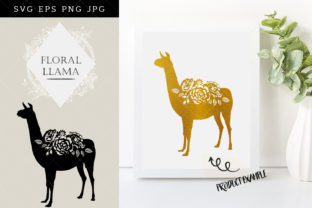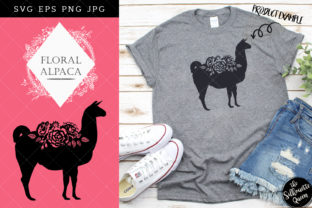
Evaluating the Floral Alpaca Silhouette Vector for Creative and Commercial Projects
Selecting the right digital asset requires more than just finding an appealing image; it demands a thorough understanding of file utility, technical specifications, and long-term application. The Floral Alpaca Silhouette Vector represents a specific niche within graphic design resources, combining rustic charm with versatile scalability. For designers, crafters, and small business owners aged 20 to 50, this asset type serves as a bridge between detailed illustration and clean, reproducible graphics. Understanding the distinct composition of this package—specifically the inclusion of high-resolution PNGs, white-background JPGs, and editable SVG and EPS files—is essential for determining whether it aligns with your current workflow and project requirements.
Defining the Asset: Technical Specifications and Utility
The primary value of the Floral Alpaca Silhouette Vector lies in its multi-format delivery system. Unlike single-file downloads that limit usage to specific software or print sizes, this collection addresses multiple stages of the creative process. The package includes one PNG file with a transparent background at 300dpi, measuring approximately 10 inches at its widest point. This specification is critical for users who need immediate placement onto colored backgrounds, merchandise mockups, or digital layouts without the tedious step of manual background removal. The 300dpi resolution ensures that even at the 10-inch width, the edges remain crisp for standard printing tasks, though users should note that scaling beyond this dimension may result in pixelation since PNG is a raster format.
Complementing the transparent PNG is a JPG file with a white background, also at 300dpi and 10 inches wide. While often overlooked by advanced designers, the white-background JPG remains a staple for quick previews, client approvals, and compatibility with legacy systems or basic office software that cannot interpret transparency layers. It serves as a universal fallback, ensuring the asset is accessible regardless of the user's technical environment.
However, the true longevity of the Floral Alpaca Silhouette Vector comes from the included SVG and EPS files. These vector formats differ fundamentally from their raster counterparts. Because they are constructed from mathematical paths rather than pixels, they allow for infinite scaling without quality loss. Whether you are printing a 2-inch sticker or a 6-foot vinyl banner, the vector files maintain perfect edge definition. Furthermore, these formats enable color manipulation and node editing, allowing users to customize the floral elements or adjust the alpaca’s proportions to fit unique layout constraints. This editability distinguishes professional-grade assets from basic clip art.
Comparing Silhouette Vectors Against Detailed Illustrations
When researching visual assets, buyers often weigh silhouette vectors against full-color illustrations or line art. Each style serves a different functional purpose, and choosing the wrong one can lead to production issues or aesthetic mismatches. The Floral Alpaca Silhouette Vector prioritizes shape and form over internal detail. This makes it exceptionally strong for applications where contrast and readability are paramount, such as heat transfer vinyl (HTV) cutting, laser engraving, or embroidery digitizing.
In comparison, detailed illustrations offer richer storytelling but present significant challenges in fabrication. Intricate shading and gradients do not translate well to single-color cutting machines or screen printing setups. If your project involves Cricut, Silhouette Cameo, or industrial laser cutters, the solid fills of a silhouette vector reduce weeding time and minimize material waste. Conversely, if the goal is a children’s book illustration or a complex web hero image requiring depth and texture, a silhouette may appear too flat or abstract. Evaluators must assess the end-use medium before committing to a style.
Another key comparison point is licensing and originality. Generic stock sites often host thousands of similar animal silhouettes, making brand differentiation difficult. A specialized Floral Alpaca Silhouette Vector typically offers a more curated aesthetic that blends specific botanical elements with the animal form, creating a cohesive design unit. This integration saves time compared to sourcing separate alpaca and flower vectors and attempting to merge them manually, which often results in disjointed styling or mismatched stroke weights.
Workflow Integration: When Raster Meets Vector
A common decision factor for creative professionals is balancing speed with flexibility. The dual nature of this asset package supports both rapid deployment and deep customization. For social media managers or event planners working under tight deadlines, the pre-sized 10-inch PNG allows for instant integration into Canva, Photoshop, or Procreate templates. There is no need to open Illustrator or configure artboards; the asset is ready to use immediately. This efficiency is invaluable for high-volume content creation where perfection is less important than consistency and speed.
For product designers and print shops, however, the SVG and EPS files are the operational core. Consider a scenario where a client wants the floral alpaca design on both a coffee mug and a tote bag. The raster PNG might work perfectly for the mug sublimation, but the tote bag requires a larger footprint. With the vector files, the designer can scale the artwork to 15 inches for the bag without any degradation. Additionally, if the client requests a color change from black to forest green, the vector file allows this adjustment in seconds. Relying solely on the PNG would require repurchasing or redrawing the asset, highlighting the economic and practical superiority of having vector sources available.
It is also worth noting the interoperability of the EPS format. While SVG has become the standard for web and modern cutting software, EPS remains the industry standard for professional print houses and older versions of Adobe Illustrator. Including both formats ensures that the Floral Alpaca Silhouette Vector remains compatible across decades of software evolution and varying vendor requirements. This forward-and-backward compatibility reduces friction when collaborating with external vendors who may use different tech stacks.
Assessing Limitations and Best-Fit Scenarios
Despite its versatility, the Floral Alpaca Silhouette Vector is not a universal solution. Recognizing its limitations prevents buyer remorse and project delays. The most significant constraint is the inherent simplicity of the silhouette style. If a project requires photorealism, emotional facial expressions, or complex lighting effects, this asset type will fall short. Silhouettes rely on recognizable outlines; if the floral integration obscures the animal's profile too much, the subject may become unidentifiable at smaller sizes. Users should always test the design at the smallest intended reproduction size to ensure legibility.
Additionally, while the 10-inch raster files are high resolution, they are not suitable for large-format printing. Some users mistakenly believe that 300dpi implies unlimited size, but DPI is relative to physical dimensions. A 10-inch image at 300dpi contains a fixed number of pixels. Enlarging it to 20 inches effectively drops the resolution to 150dpi, resulting in visible softness. For any application exceeding the provided 10-inch width, users must commit to using the SVG or EPS files and possess the necessary software to export them at the correct size. Those without vector editing capabilities may find themselves limited by the raster dimensions.
This asset is best suited for:
- Crafters and Makers: Ideal for vinyl decals, wood signs, and t-shirt designs where clean lines are necessary for machine cutting.
- Boutique Brands: Perfect for logo accents, packaging stickers, and thank-you cards that require a cohesive, nature-inspired aesthetic.
- Event Stationery: Suitable for wedding invitations, baby shower programs, and place cards where a blend of whimsy and elegance is desired.
- Digital Content Creators: Useful for blog headers, Pinterest pins, and social media overlays where transparent backgrounds facilitate easy layering.
Conversely, readers should seek alternative resources if they require:
- Photographic realism or highly detailed anatomical accuracy.
- Pre-colored variations with complex gradients or textures.
- Assets specifically optimized for animation or 3D modeling.
- Commercial licenses that include exclusive rights or trademark registration support (always verify the specific license terms of any vector purchase).
Making an Informed Selection
Ultimately, the decision to acquire a Floral Alpaca Silhouette Vector should be driven by project specifics rather than general appeal. Evaluate your primary output method first. If you are primarily a digital designer who rarely prints larger than letter size, the PNG component may provide 90% of the value you need. However, if you operate in physical product manufacturing or professional printing, the presence of clean, node-optimized SVG and EPS files is non-negotiable. The inclusion of both raster and vector formats in a single package offers a balanced compromise, reducing the need to source multiple files for different stages of production.
Consider also the stylistic alignment with your existing portfolio. Silhouette vectors have a distinct folk-art or vintage quality. They pair exceptionally well with serif typography, kraft paper textures, and muted color palettes. They may clash with neon aesthetics, futuristic tech themes, or minimalist corporate branding. By honestly assessing the visual language of your current projects against the inherent style of the floral alpaca motif, you can determine if this resource will enhance your work or create dissonance.
Finally, verify the technical integrity before finalizing any acquisition. Ensure the vector files are truly vectorized and not merely embedded rasters within an EPS container. True vectors should reveal anchor points and paths when opened in editing software. Confirm that the transparent PNG has clean edges without halos or artifacts, as these defects become glaringly obvious when placed on dark backgrounds. By applying these evaluation criteria, adults navigating the vast marketplace of digital assets can select resources that offer genuine utility, professional reliability, and creative flexibility.