Floral Background Paper - Victoria: Evaluation and Usage Guide
Selecting the appropriate digital assets for a creative project requires balancing aesthetic appeal with technical suitability. The Floral Background Paper - Victoria collection represents a specific category of digital design resources characterized by vintage-inspired botanical motifs and distinct technical specifications. For designers, crafters, and content creators evaluating this asset pack, understanding its precise parameters is essential for determining whether it aligns with current project requirements. This guide provides an objective analysis of the collection's features, optimal use cases, and limitations to facilitate informed decision-making.
Defining the Asset Collection
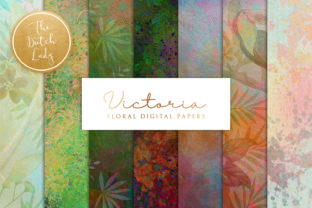
The Floral Background Paper - Victoria set is a curated bundle of digital textures designed to evoke traditional floral aesthetics. Unlike vector graphics or scalable illustrations, these files are raster-based images intended to serve as foundational layers in composite designs or as standalone backgrounds. The collection consists of seven unique digital paper image files. Each file is delivered in .JPEG format, a widely compatible standard that balances color fidelity with file manageability.
A critical distinction for this specific collection is that the patterns are not seamless. This means the edges of the 3600x3600 pixel canvas do not match up when tiled horizontally or vertically. Consequently, these papers are designed to be used as single, complete compositions rather than repeating textures. This non-seamless nature influences how the asset should be applied, making it ideal for fixed-dimension projects like scrapbook pages or card fronts, but less suitable for website headers or wrapping paper that requires infinite tiling.
Technical Specifications and Print Viability
Evaluating digital paper requires a close examination of resolution and dimensions. The Floral Background Paper - Victoria files are sized at 3600x3600 pixels. In physical terms, this equates to a 12x12 inch square. This dimension is significant because it corresponds to the industry-standard size for digital scrapbooking and many photo album formats.
The resolution is set at 300dpi (dots per inch), which is the benchmark for high-quality commercial and home printing. At this density, the floral details remain crisp and free of pixelation when printed at full 12x12 scale. Users intending to print these designs on physical media—such as cardstock, mugs, t-shirts, or wall art—can expect professional-grade clarity. However, users should note that scaling the image beyond 12x12 inches will result in a loss of sharpness. While the 300dpi specification supports high-fidelity output, it does not support infinite enlargement. For large-format signage or banners exceeding the native dimensions, vector alternatives or higher-resolution raster files would be necessary.
Optimal Use Cases and Applications
Given the specific attributes of the Victoria collection, several applications emerge as strong fits. The non-seamless, high-resolution nature of these files makes them particularly effective for:
- Digital Card Making: The 12x12 inch canvas provides ample space for creating greeting cards. Designers can crop specific floral clusters from the main image to create focal points or use the full sheet as a backdrop for text overlays.
- Scrapbooking and Photo Albums: As the dimensions match standard photo album inserts, these papers serve as ready-to-use backgrounds without requiring resizing or cropping, preserving the integrity of the original composition.
- Print-on-Demand Merchandise: The 300dpi resolution supports direct printing on apparel and drinkware. The vintage floral aesthetic aligns well with cottagecore, shabby chic, and romantic design trends popular in merchandise markets.
- Blog and Website Hero Images: While not suitable for tiling backgrounds, these images work effectively as singular hero banners or featured post thumbnails where a fixed aspect ratio is acceptable.
- Mixed Media Bases: Digital artists often use these papers as a textured base layer in software like Procreate or Photoshop, blending the floral elements with hand-drawn illustrations to add depth and historical context to modern artwork.
Tradeoffs and Considerations
While the Floral Background Paper - Victoria offers distinct advantages, potential users must weigh specific tradeoffs. The primary limitation is the lack of seamlessness. Designers accustomed to pattern fills or CSS background-repeat properties will find these files restrictive. If a project requires a continuous pattern across a variable-width web container or a large roll of gift wrap, this collection is not the appropriate tool. Attempting to force a non-seamless image into a tiling workflow results in visible grid lines and disjointed motifs.
Additionally, the .JPEG format, while universally compatible, utilizes lossy compression. For most background applications, this is imperceptible. However, if a user intends to heavily edit the color grading, adjust curves, or manipulate individual elements within the flat image, they may encounter compression artifacts or banding. Professionals requiring extensive post-processing flexibility typically prefer TIFF or PSD formats with uncompressed layers. Users should assess their editing workflow; if the paper is to be used "as is" or with minimal adjustment, JPEG is sufficient. If heavy manipulation is planned, testing a sample file first is advisable.
Another consideration is stylistic specificity. The "Victoria" designation implies a particular historical and aesthetic niche. These designs feature dense, ornate floral arrangements typical of Victorian-era textiles. This style is highly effective for weddings, anniversaries, historical fiction covers, and vintage-themed branding. Conversely, it may clash with minimalist, corporate, or futuristic design schemes. Evaluators should ensure the visual language of the collection harmonizes with their broader brand identity or project theme before acquisition.
Decision-Making Framework
Determining whether the Floral Background Paper - Victoria is the right investment involves answering three practical questions regarding project scope, output method, and aesthetic alignment.
First, consider the output dimensions. If the final deliverable is 12x12 inches or smaller, or if the aspect ratio allows for intelligent cropping of a square image, this collection is technically adequate. If the project demands larger formats or specific non-square ratios that cannot be achieved through cropping without losing key design elements, alternative assets should be sought.
Second, evaluate the tiling requirement. Does the design need to repeat? If the answer is yes, this product is incompatible. If the design calls for a singular, self-contained composition, the non-seamless attribute becomes a feature rather than a flaw, as non-seamless papers often possess more complex, centralized compositions that look more intentional than generated repeats.
Third, assess the editing intent. Is the goal to provide immediate texture and atmosphere, or to deconstruct and rebuild the image? For atmospheric backgrounding and direct printing, the 300dpi JPEGs offer excellent value and ease of use. For deep compositing requiring element isolation, users may need to supplement this pack with clipart or vector florals.
Final Evaluation
The Floral Background Paper - Victoria serves a distinct segment of the digital design market. It excels as a high-resolution, print-ready resource for fixed-size projects that benefit from vintage botanical aesthetics. Its strengths lie in its adherence to printing standards and its versatility across physical and digital mediums within the 12x12 inch constraint. By understanding the implications of its non-seamless nature and JPEG format, users can effectively leverage this collection to enhance card making, scrapbooking, and merchandise design. Successful integration depends not on the inherent quality of the files alone, but on matching those technical specifications to the appropriate creative application.